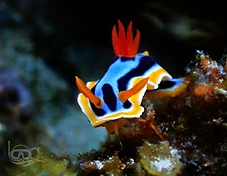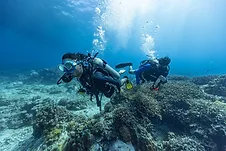

By day, Dauin invites you to look for small creatures among the volcanic sand, reefs and submerged structures. After sunset, your torch draws your attention to a smaller area and opens up different opportunities to observe marine life.
A night dive in Dauin can complement your daytime dives, whether you enjoy macro photography or just want to see what happens on the seabed after dusk.
This guide covers what you might see, what to consider before your first night dive and how to fit one into your stay.
What changes underwater at night?
Animal activity changes throughout the day. Some species find shelter to rest, while others come out to feed. Octopuses and a variety of crustaceans can become more active after dark. PADI’s guide to nocturnal marine life
The way you look at the reef changes, too. Your torch draws your eye to one place at a time, whether it’s a gap between rocks, a small structure or movement across the sand.
Even a site you’ve dived before can feel quite different at night. Seeing it by day can help you get your bearings before your first night dive. PADI’s night diving tips
What might you see on a night dive in Dauin?
Possible encounters include:
- Octopuses: Watching how they move and change their appearance can be a highlight of the dive.
- Crabs and other crustaceans: Look closely around the places where they shelter.
- Squid: You might spot them along the route, offering a different sight from the creatures on the seabed.
- Resting fish: Some reef fish spend the night in sheltered spots. We watch without disturbing them.
What you see depends on the site, conditions and timing. Booking a night dive doesn’t guarantee a particular sighting. Part of the appeal is discovering what’s happening that night.
Where do we night dive in Dauin?
The coast has sandy sites, reefs and submerged structures that lend themselves to different routes.
Secret Corner is one of the sites we recommend in our guide for macro life and night diving. San Miguel also offers opportunities to watch small animals after sunset.
We confirm the site for your dive according to the conditions and the group’s experience. Currents can change, so a site that’s good for photography may be unsuitable on a particular day.
If you’re looking for a particular experience, tell us before we plan your dives. We’ll take it into account while keeping the site flexible in case sea conditions change.
Can I join if I’ve never dived at night?
At Dauin Diving Center, we run guided night dives for certified divers from Open Water Diver level. We consider your recent experience and conditions. If it’s your first night dive, let us know so we can talk through the preparation with you.
Along with your certification, tell us when you last dived and how comfortable you feel with buoyancy and your equipment.
If you haven’t dived in a while, we can discuss starting with a daytime dive or refresher before planning a night dive.
How we prepare for the dive
Before entering the water, we go over the route, communication and how the group will dive together. The briefing covers torch use, signals and the exit plan.
We use a primary torch and a backup for night diving. If you need to rent equipment, tell us when you book so we can confirm what to prepare and what it costs.
During the dive, we stay aware of our buddy and guide. We also avoid shining lights into other divers’ eyes. PADI’s guidance on torches and signals
The briefing is a good time to ask questions. If the dark, underwater navigation or handling your torch is on your mind, bring it up before we start.
Underwater photography at night
A night dive can offer opportunities to photograph small animals. Using a camera also adds another task to the dive.
On your first night dive, you might prefer to get comfortable with your surroundings and save photography for another time. If you’re already comfortable using your camera, tell us what gear you use when planning your dives.
For respectful photography, give the animal space, avoid spending too long on one subject and move away if your presence changes its behaviour. We never move animals to improve a photo.
With or without a camera, controlling your position above the seabed helps you observe without putting your hands down or stirring up sand.
How to fit a night dive into your trip
If you have several diving days, you could start with daytime diving and plan the night dive for later. That gives you time to get to know the area, check your equipment and talk through what you’d like to see.
Allow time to rest, too. A night dive can replace another dive in your itinerary if your day is already full.
Tell us what you have planned for the next day, especially if you have an early flight or transfer. A later finish changes the time from which you calculate your pre-flight interval.
We confirm meeting and entry times for each dive. Leave some room before any other activity you book afterwards.
Plan your night dive in Dauin
When you get in touch, tell us your dates, certification level, recent experience and whether you’ve night dived before. Let us know if you need torches or other rental equipment.
At Dauin Diving Center, we’ll help you fit a night dive into your stay. Check our rates or contact us to make a plan.